Verjus, the acidity that came before lemon
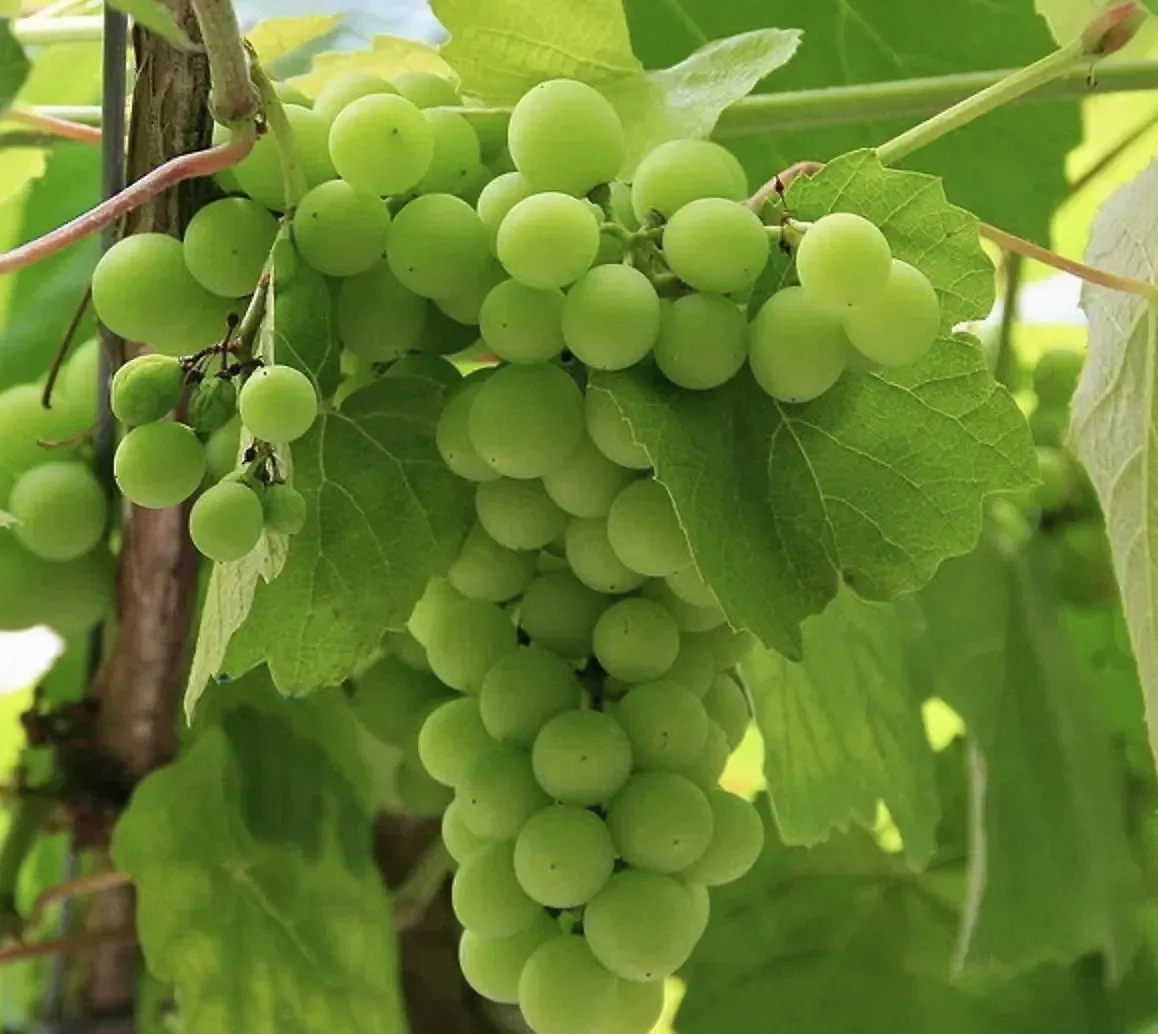
For a long time, verjus was a common kitchen acidity in Europe, drawn from grapes picked before they ripened. Lemon, by becoming cheap and available all year round, almost made it disappear. It is coming back today in kitchens and behind bars, and it interests me particularly for alcohol-free work.
Neither wine nor vinegar
Verjus is indeed a grape juice — but from grapes picked before ripeness, still green and sour. Not to be confused with ripe grape juice, sweet, the kind you drink as it is: verjus is too acidic and too low in sugar for that. It is a seasoning, not a drink in itself.
Nor is it a vinegar: it has not undergone acetic fermentation. It has not even undergone alcoholic fermentation — it is pressed and bottled before the yeasts come into play, which is why it contains almost no alcohol.
Its acidity comes straight from the grape. It rests mainly on tartaric acid and malic acid, the same acid base as wine. Lemon owes its bite to citric acid; vinegar, to acetic acid. That difference in nature changes a great deal on the palate.
Where the grapes come from
Verjus is pressed from bunches harvested before or around veraison — the moment the berry begins to change colour, to soften and to accumulate sugar. Before that stage the grape is green, hard and very acidic: exactly what is needed.
Those grapes can come from a green harvest — cutting off part of the crop to lighten the load on the vine and concentrate ripening in the bunches that remain — or from a pick made specifically to produce verjus. A green harvest is not a systematic practice: it depends on the yield, the vintage and the grower's choice.
What the vine puts in the glass
Verjus contains very little sugar and is far more acidic than juice from fully ripe grapes. A 2020 study covering four grape varieties measured pH values around 2.5 and a sugar content close to 5 °Brix. These figures are only indicative: they vary strongly with the grape variety, the degree of ripeness at pressing and the production method. It is a living product, to be tasted before each use rather than dosed blindly.
On the palate, there is a clean acidity that suggests green apple, an almost mineral saline edge, and a discreet grape note underneath. Above all, verjus does not have the aromatic force of lemon: it brings acidity without imposing its perfume on a drink.
A long history, a long eclipse
The use of green grape juice is attested as far back as Roman antiquity. It holds a central place in medieval and Renaissance cooking: it is used to deglaze, to build sauces, to bind a preparation that needs acidity. Burgundy and Dijon mustard was long made with verjus rather than vinegar; the Moutarderie Fallot, founded in 1840, still offers a verjus mustard.
Verjus fades as citrus spreads through Europe and lemon becomes cheap and available all year. Precise datings vary between sources, but the trajectory is clear: a common ingredient became a rare one.
Verjus behind the bar
This is where it becomes useful again. An alcohol-free drink often falls flat: it seems sweet, one-note, without structure. Verjus brings acidity and a form of texture, of length, a minerality that moves the result closer to what wine gives naturally.
Because it is softer and rounder than lemon, I don't substitute it for citrus juice litre for litre. I use it in a larger proportion, or blend it with a small amount of lemon to keep some edge — it's a question of balance, adjusted by taste.
Two practical advantages follow: verjus is produced here, at harvest time, with a lighter footprint than an imported citrus; and it makes use of grapes that would otherwise have none.
A simple direction for an alcohol-free aperitif: verjus lengthened with sparkling water, a light herbal infusion — verbena, elderflower, a twist of zest — and a touch of oleo-saccharum to round it off. It's not a fixed recipe, it's a direction: verjus gives the tension, the rest dresses it.
In short
Verjus is not a historian's curiosity. It is an acidity that comes straight from the fruit, available at the moment the grapes are pressed, that lets you give tension to a drink without imposing the perfume of a citrus — and lets you look at green grapes as an ingredient in their own right.
Sources
- Salah Eddine et al., "Effect of Four Grape Varieties on the Physicochemical and Sensory Properties of Unripe Grape Verjuice", International Journal of Food Science, 2020
- Kallithraka et al., "Chemical and sensory analysis of verjuice: an acidic food ingredient obtained from unripe grape berries", Food Bioscience, 2017
- Wikipédia — "Véraison" and "Vendange en vert"
- MYSA Natural Wine, "What is Verjus? Wine’s Juicy Friend"
- Modern Farmer, "Unripe Grapes Are Good For Something", 2014
- StarChefs, "Verjus in Lieu"
- Moutarderie Edmond Fallot, "Mustard in Burgundy"
- 52 Martinis, "Verjus: What is it and Why to use it in Cocktails"